
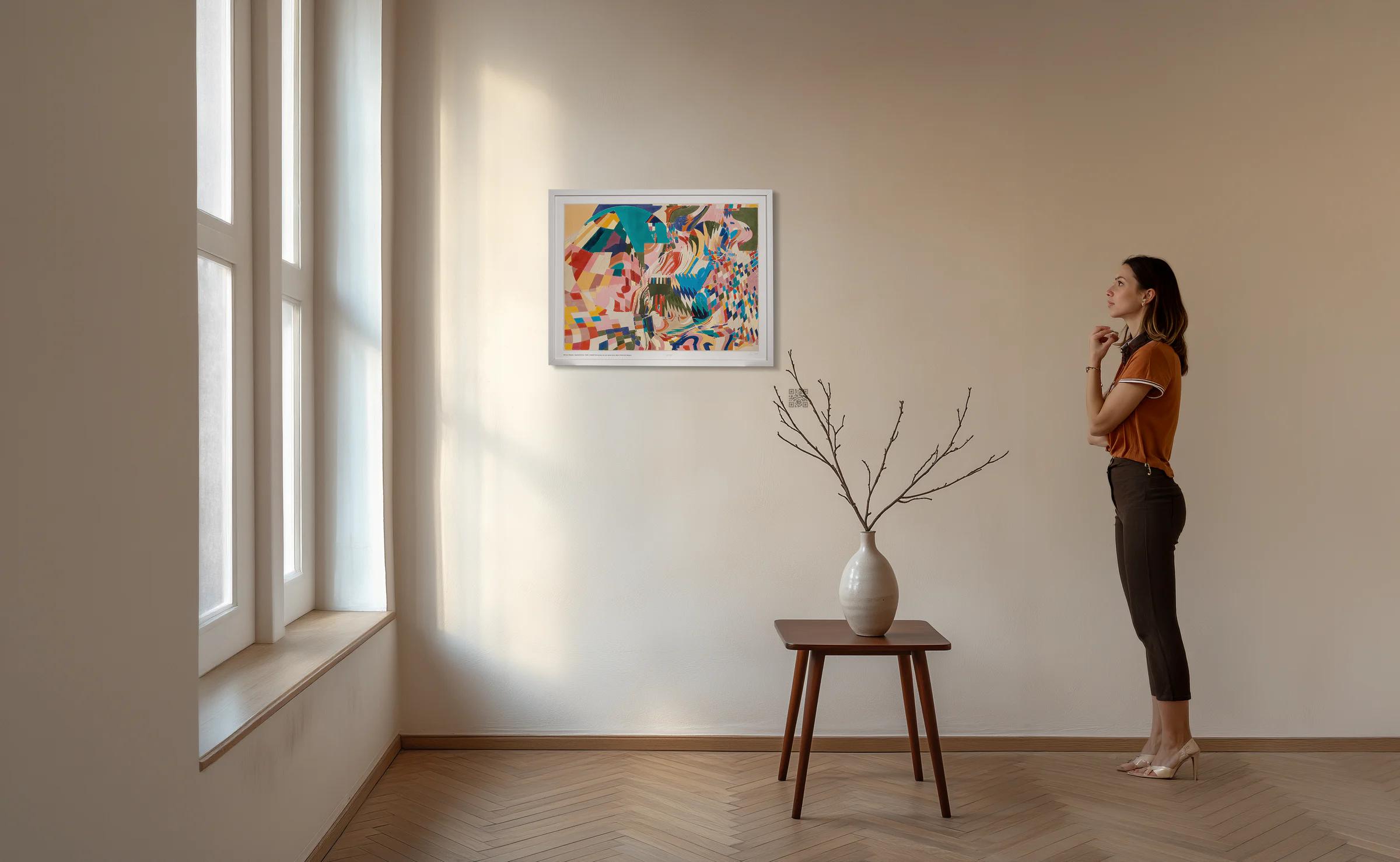

Most galleries still behave as if the important moment happens at the opening. A room fills, a list circulates, a sale is made, and the work disappears into a private wall. Galerie Midl begins later: when the work has to live with clients, staff, visitors, daylight, and the quiet judgment of a room.
That is why the gallery is called Midl. The name is not a branding exercise. It is a position: art should be selected with intimacy, installed with care, and changed before it turns invisible.
The name is a working method
“Midl” was Gustav Klimt’s private name for Emilie Flöge, the designer, businesswoman, and collaborator whose life around Klimt was never merely decorative. Galerie Midl takes that history seriously without staging it as nostalgia. The name points to a different kind of gallery intelligence: close to the work, attentive to the room, and practical about the life around it.
On the site, Midl appears as an AI gallerist. In the business, she is less mascot than memory. She remembers rooms, budget ceilings, lease terms, color aversions, client tastes, and which wall has already carried a gold surface for six months. That is simply gallery labour, made available outside opening hours.
A gallery for rooms, not inventory
An inventory view answers the wrong question first. It asks what is available. Most rooms ask something more exact: what should this wall say before anyone speaks?
That is where the roster becomes useful. Klimt gives the gallery a Viennese temperature; Refik Anadol gives atmosphere and data a visible body; William Mapan brings algorithmic restraint; Nychos brings anatomy and speed; Trevor Andrew turns brand language into irreverent painting; Olaolu Slawn paints with raw, fast immediacy; Trevor Jones gilds the classical image for a collector culture; Slimesunday keeps the image unstable and charged. The artists do not share one style. They give Midl different vocabularies for different rooms.
“A wall is never neutral. It tells clients what kind of room they have entered before anyone says a word.”
Rotation gives the work a second life
Galerie Midl is built around leasing because many spaces need art more than they need ownership. A law firm, clinic, hotel, or studio wants atmosphere, authority, and renewal. It does not always need another permanent asset in storage.
The rotation model matters here. A 3-month term tests a room; a 6-month term gives the work time to become familiar, and is five percent off; a 12-month term creates a longer rhythm and is ten percent off. When the work changes, the room becomes visible again.
The digital layer should earn trust
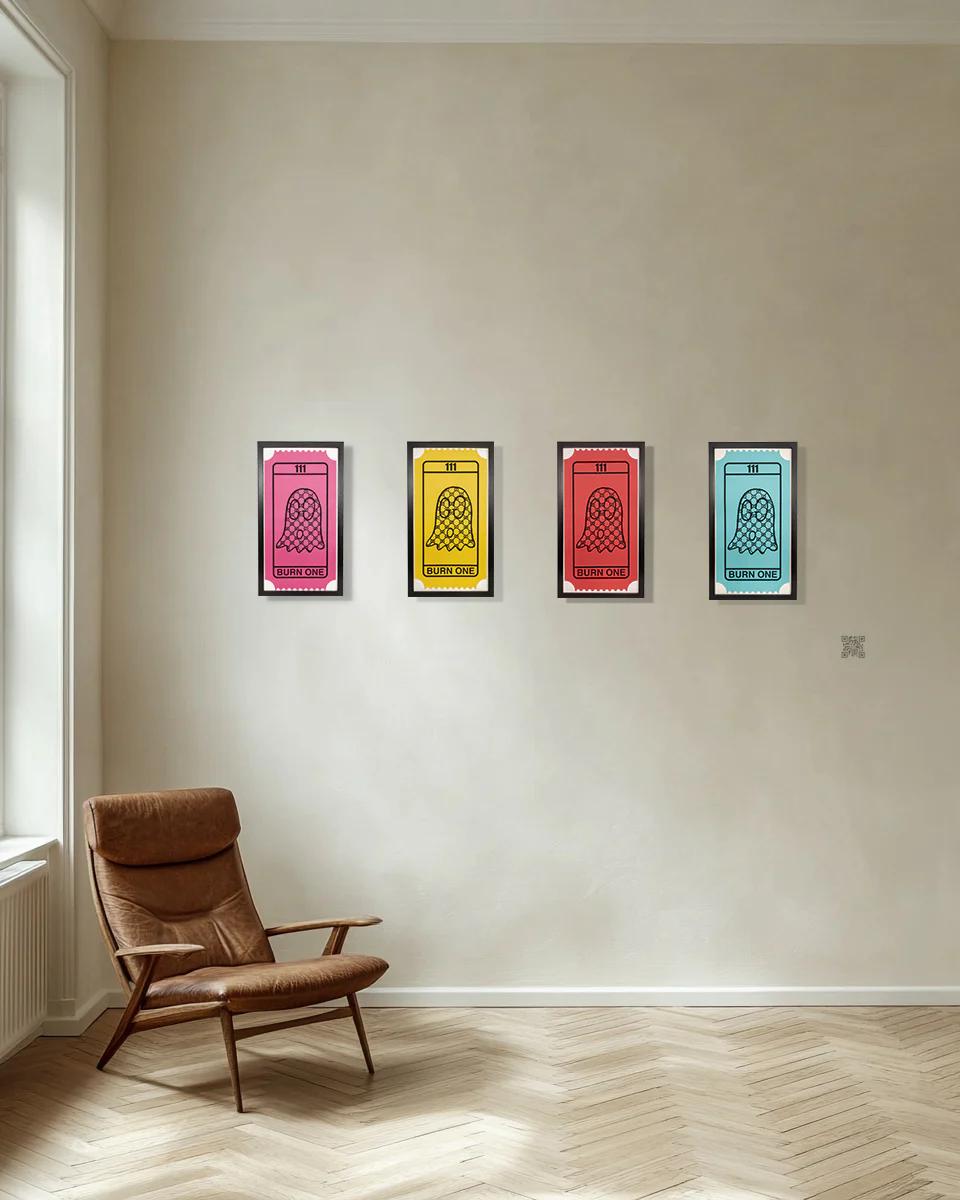
For digital and generative work, presentation is often where confidence is lost. A thumbnail is too thin; a technical claim is too abstract; a sales page is too fast. The question is simpler: can the visitor understand how the work will feel before it arrives?
Midl uses the digital layer to slow that decision down. Product pages pair artwork context with room logic; 3D scans make scale and surface easier to judge; the chat lets a visitor bring constraints instead of browsing in silence. On a computer, the whole collection also hangs in a walkable 3D gallery, every work at its real size, with Midl on hand to talk about whatever is on the wall in front of you. The technology exists to return attention to the work.
Why this matters now
The institutional argument for digital art is no longer fragile. MoMA, Serpentine, and artists such as Refik Anadol have made the conversation visible to a wider public. But a gallery cannot live on validation alone. It has to answer the domestic and commercial question: where does the work belong on Monday morning?
Vienna is a useful place to answer that. The Secession motto still holds: “Der Zeit ihre Kunst, der Kunst ihre Freiheit.” Galerie Midl adds a practical footnote for 2026: to every room, a work that can change it.
Browse the collection, or open a conversation with Midl. Bring one room, one mood, and one constraint. She will start there.
Sources
- Letter from Gustav Klimt to Emilie Flöge, 3 September 1898. Belvedere, Collection Online.
- Klimt & The Kiss, official trailer. Exhibition On Screen. (video)
- The Secession Building. Vienna Secession.
- Refik Anadol: Unsupervised, exhibition page. MoMA, New York.
- Holly Herndon and Mat Dryhurst: The Call, exhibition film. Serpentine, London. (video)
- geofront, real-time 3D for art. geofront e.U.