
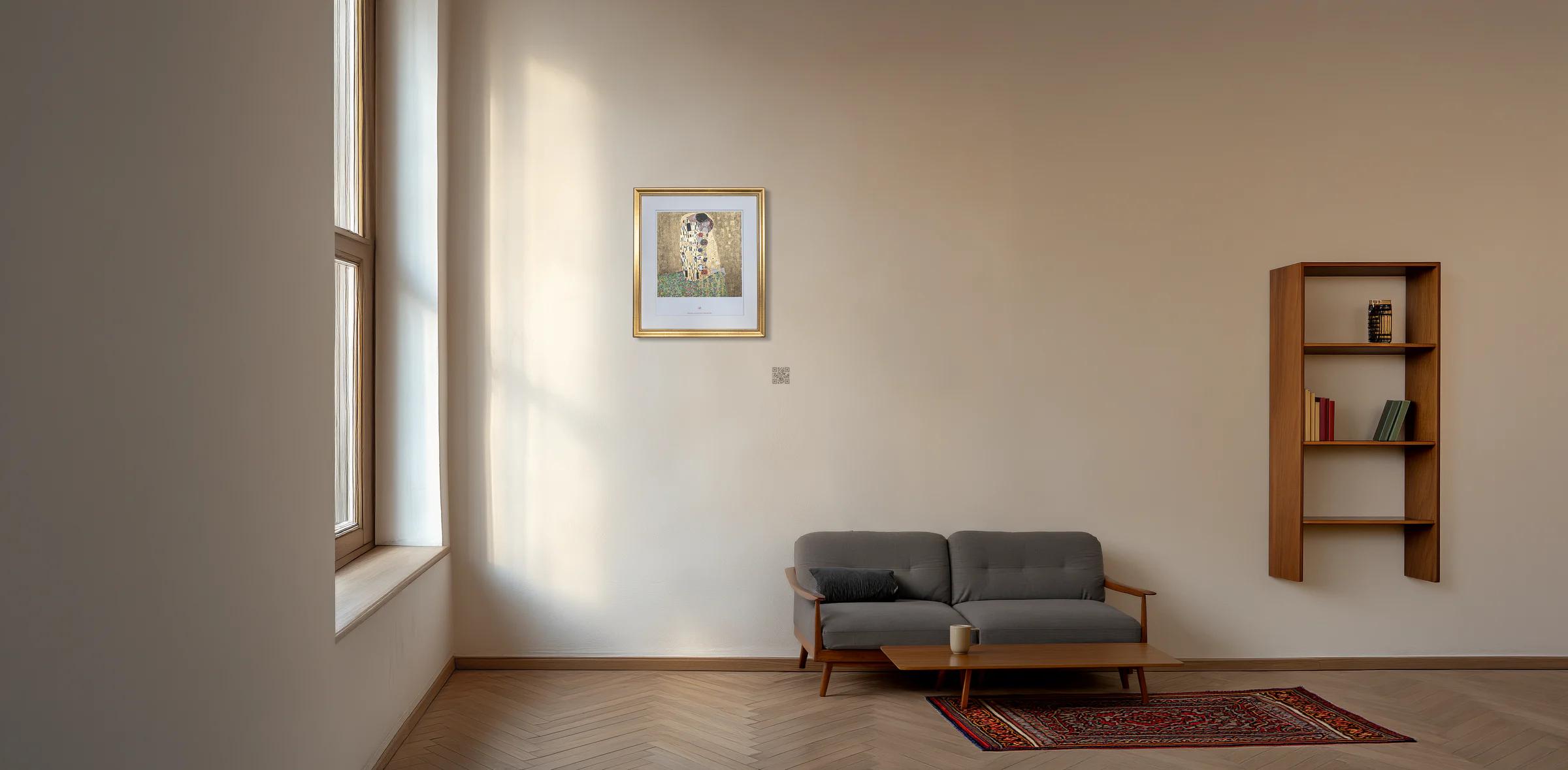

A business wall is not empty space. It is part of how a client reads the room, how a team experiences the day, and how a company signals taste before anyone speaks. That is why art leasing works: it turns a fixed wall into a changeable cultural surface.
For many Vienna businesses, leasing is simply the more useful format: the work arrives framed, delivered, installed, and insured, rotates on schedule, and leaves without asking the client to become an art logistics department.
The decision is spatial before it is financial
A law firm reception has a different job from a hotel corridor. A medical waiting room needs a different tempo from a founder’s office. The first question is therefore not “What do you like?” It is “What should this room do?”
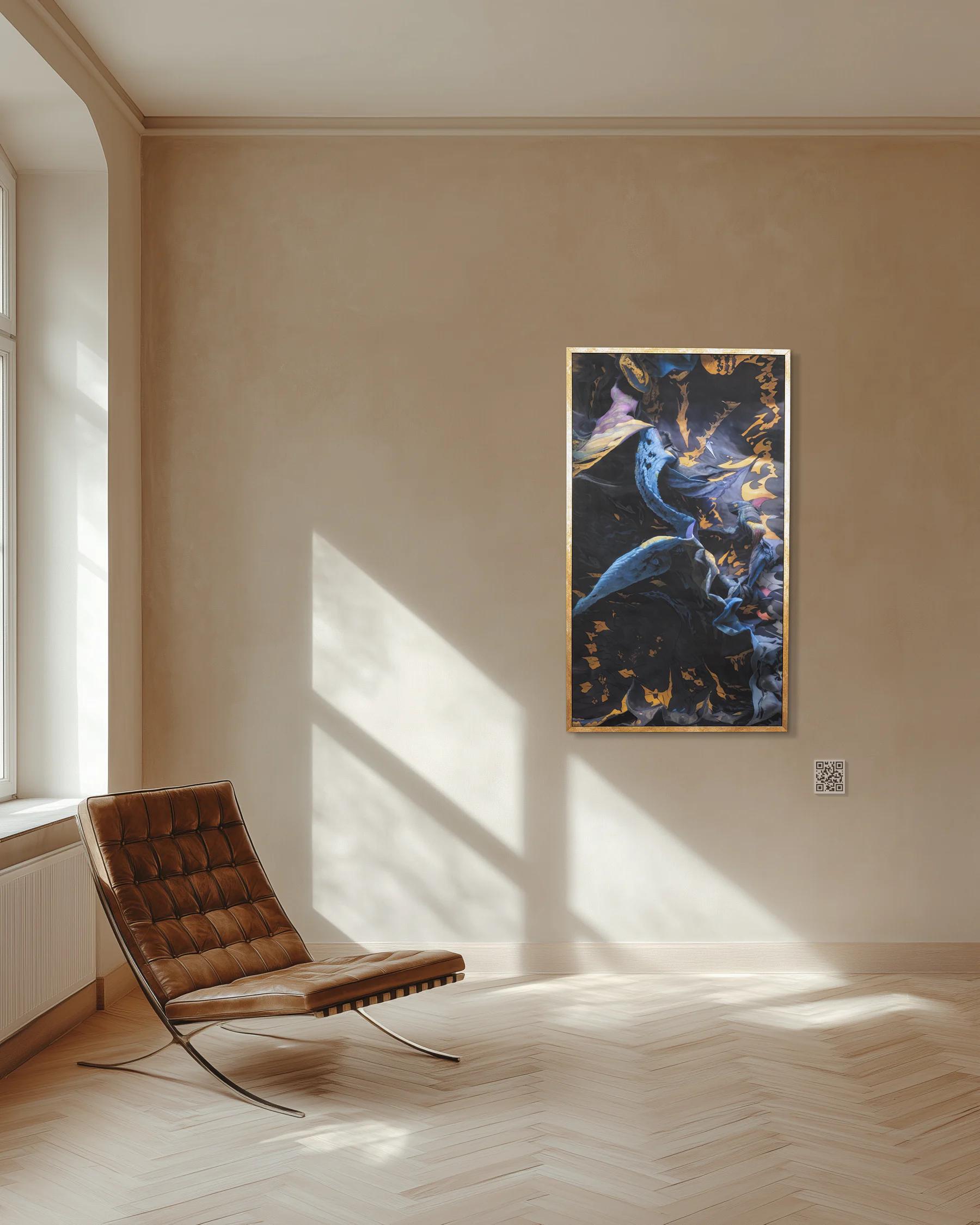
Midl uses that question to narrow the field. Calm work can lower the temperature of a waiting room. A strong Refik Anadol piece can give a lobby momentum. A grouped Gucci Ghost installation can make a corridor feel intentional rather than transitional.
How the lease is structured
Galerie Midl leases framed works for 3, 6, or 12 months. Every lease includes framing, delivery, professional installation, insurance, pickup, and one rotation per term. For a first-time client, the first month of the term is free: a 12-month lease bills 11 months, a 6-month lease bills five, and a 3-month lease bills two.
Lease tiers
| Tier | Internal size | Monthly rate | Best use |
|---|---|---|---|
| Standard | Small | EUR 65 | Treatment rooms, private offices, small receptions |
| Classic | Medium | EUR 99 | Waiting areas, conference rooms, lobbies |
| Premium | Large | EUR 120 | Feature walls, atriums, high-traffic rooms |
Discount structure
| Type | Trigger | Discount |
|---|---|---|
| Duration | 6-month term | 5% |
| Duration | 12-month term | 10% |
| Volume | 2 to 3 works | 5% |
| Volume | 4 or more works | 10% |
Discounts stack up to a 20% combined maximum. That keeps the offer simple enough to explain in a meeting and concrete enough for a finance team to evaluate.
Rotation is the part clients feel
A purchased work can become furniture by the second year. A leased work carries a different promise: the room will not stay still. For a business with returning clients, that change gives the space a new point of attention.
The strongest rotation rhythm is usually practical. Three months works for high-traffic rooms and hospitality settings. Six months works for more formal offices and practices. Twelve months works when a business wants a stable statement with a planned refresh already built in.
The tax framing, carefully stated
In Austria, business-related expenses are generally understood through the framework of Betriebsausgaben when they are connected to business activity, documented, and not privately motivated. Austria’s federal business service portal USP describes these expenses as costs caused by business activity that reduce taxable profit.
Lease payments tied to business use generally fall into that category when they are properly documented.
We are gallerists, not tax advisers; your Steuerberater will confirm the exact treatment for your company. The practical point remains: leasing keeps the art in the operating rhythm of the business rather than turning it into a permanent asset question.
Three rooms, three different jobs
The same artwork can fail in one room and work beautifully in another. Leasing lets the placement respond to the use of the space.
- Reception: choose a work that slows the first impression and gives the client something generous to look at while waiting.
- Conference room: choose a work with authority and enough visual complexity to support repeated viewing.
- Corridor or hotel passage: choose a sequence or grouped installation so movement through the space feels curated.
How to start
The simplest start is one room and one work. Before anything is delivered, you can inspect each work as a 3D scan on its product page, or walk past it at its real size in the 3D gallery. By the first rotation it is clear whether the piece moves the room in the right direction, and the second placement becomes easier to judge.
Browse the collection, or open a conversation with Midl. Bring the room, the wall, and the mood. The first recommendation should come from the space, not from a catalogue.
Sources
- Betriebseinnahmen und Betriebsausgaben. Unternehmensserviceportal (USP).
- Ertragsteuerliche Aspekte des Leasings. Wirtschaftskammer Österreich (WKO).
- Diese Betriebsausgaben vergessen Gründer am häufigsten. Gründerservice, the WKO founders’ service. (video)